A Piedmont lawn can be flexible, then unexpectedly stubborn. Greensboro's mix of clay-heavy soils, damp summertimes, and unforeseeable rain makes watering seem like a moving target. The right method keeps turf resilient through July heat and fall aeration, and it does it without squandering water or reproducing fungi. After years of strolling residential or commercial properties from Irving Park to Adams Farm, the pattern is clear: wise watering in Greensboro has to do with timing, depth, and adjusting to microclimates backyard by yard.
What makes Greensboro different
The Triad sits in a damp subtropical zone with four distinct seasons. Spring awakens fast, summer brings long hot spells punctuated by torrential afternoon storms, and fall cools slowly before winter dips below freezing. That rhythm matters more than any generic watering rule you'll discover online.
Soils are the other heading. Much of Greensboro's property soil is red clay or clay-loam. Clay holds water well, but it drains pipes gradually and compacts easily. Water can sit near the surface, starve roots of oxygen, then harden like brick, sending out roots up instead of down. Include the shade lines from mature oaks and pines, and you end up with a lawn that acts extremely differently from one side to the other.
Understanding those constraints lets you water with function rather than practice. The objective isn't green at all costs, it's a deep-rooted lawn that can manage heat and foot traffic without demanding a hose https://privatebin.net/?b13b73ae8f394c12#4ijFppXnvx95376mjAe4fiZkN7HTUbfddagY1NFJMP7w every evening.
Know your grass: cool-season vs warm-season
Greensboro rests on the shift zone between cool-season and warm-season yards. Many developed yards I see are tall fescue, in some cases mixed with Kentucky bluegrass. You'll likewise discover zoysia and Bermuda, especially on warm lots or brand-new builds going for lower summertime water use.
Tall fescue wants constant moisture spring and fall, then survival water in summertime. It dislikes standing water and damp nights. Zoysia and Bermuda love heat and can coast through summertime on less water as soon as developed, however they need aid throughout first-year facility and in serious drought.
Why this matters: the weekly water target, the schedule, and the nozzle setting change with the types. Water a fescue yard like Bermuda and you'll welcome fungi. Water Bermuda like fescue and you'll lose water with no noticeable improvement.
The genuine target: inches each week, not minutes per zone
The simplest method to get irrigation wrong is to schedule by minutes. Five minutes in Zone 1 is not equivalent to 5 minutes in Zone 3. Nozzles vary, pressure fluctuates, and soil slope and sun direct exposure travesty uniformity. Instead, believe in regards to inches of water reaching the soil.
Through spring and fall, the majority of Greensboro fescue yards thrive on approximately 1 to 1.25 inches of water per week from rain plus watering. Throughout a hot, dry stretch in July, they may need up to 1.5 inches, however just if you see stress indications. Warm-season yards frequently do well on 0.5 to 1 inch per week once developed, depending upon sun and soil. These are varieties, not rules, and adjusting to the weather matters more than hitting a precise number.
The most reliable method to equate your system to inches is a catch-cup test. Set out a couple of similar containers in a zone, run the zone for 15 minutes, then measure just how much water is in each cup. That tells you the zone's rainfall rate and how uniform the protection is. Repeat for a number of zones that represent the range of nozzles and direct exposures. If one cup is consistently half full while another is overflowing, you have a harmony issue that no amount of additional watering will fix.
Schedule for Greensboro's environment, not the calendar
Irrigation schedules ought to track the seasons and current rain. A fixed "Tuesdays and Fridays, 10 minutes a zone" schedule is easy to bear in mind and hard on the grass. Greensboro's rain can provide the whole weekly quota in an afternoon, followed by a week of heat. Then a cold front brings three gray days where the soil barely dries. Your lawn appreciates flexibility.
From my notes on regional properties:
- March to early May: Cool nights, regular rain. Irrigation is frequently unneeded. If you overseeded fescue the previous fall and require help through a dry spell, favor brief cycle-and-soak go to keep seeds and upper soil somewhat moist without drowning. Once seedlings are developed, approach much deeper, less regular watering. Late May through June: Boost frequency slightly if rains drops. Go for one thorough irrigation per week, and consider a 2nd if the week is hot and dry. Expect signs of illness if nights stay muggy. July and August: Water early morning only, and less typically but deeper. Anticipate stress on west-facing slopes and along pathways and driveways where heat radiates. Warm-season yards maintain color on leaner water. Fescue may thin, but with proper depth it rebounds in September. September and October: Prime root development weather. Watering throughout this window pays dividends. If you aerate and overseed fescue, keep the seedbed equally wet with light, frequent runs for the very first 10 to 14 days, then transition to much deeper cycles as seedlings root. November through winter: Most systems can be off. Water only during extended dry spells if soil fractures appear on recognized warm-season grass. Winterize the backflow and insulate exposed pipes before the very first tough freeze.
That rhythm modifications in a drought year. The city often problems watering suggestions, and great landscaping practices align with them. Decrease frequency, water deeply when allowed, and accept a lighter green as a sign of accountable care.
The case for morning watering
Early morning, roughly 4 to 8 a.m., is the sweet spot in Greensboro. Wind is low, evaporation is restricted, and the sun will dry leaf blades right after daybreak. Evening watering invites trouble, particularly for fescue, because long leaf moisture periods feed fungis like brown patch. Midday watering turns to vapor on contact when it is 92 degrees in the shade.
When dealing with watering controllers, prevent stacking start times so several zones run late into the morning. If you have eight zones and heavy clay, cycle-and-soak will assist, but push the very first cycles into the pre-dawn window.
Cycle-and-soak beats runoff on clay
Clay soils fill near the surface area rapidly. If you run a spray zone for 20 minutes directly, much of that water ends up on the pathway. The cycle-and-soak technique uses the same overall runtime split into much shorter bursts with pauses in between, enabling water to percolate instead of sheet off.
A common pattern on Greensboro clay is 3 cycles of 6 to 8 minutes for spray heads, with 20 to 30 minutes of soak in between cycles. For high-efficiency rotary nozzles, which apply water more gradually, 2 cycles of 12 to 15 minutes can work. Sloped front lawns benefit most from this method. It does need preparation start times so the last cycle ends before foot traffic or mowing.
How to identify tension before damage sets in
A walk across the yard informs more than a controller screen. Turf wilting programs up as a somewhat duller green and leaf blades folding lengthwise. Footprints stay visible after you stroll through the yard. Hot spots appear on southwest corners, near the mailbox surrounded by asphalt, or on that small patch removed by a pet dog's traffic. The very first indication is your hint to change a zone, not to revamp the whole schedule.
If you're seeing yellowing with adequate moisture and cooler nights, think disease or nutrient deficiency rather than dry spell. On the other hand, a bluish-green cast in summer usually marks dry stress, particularly for fescue. A screwdriver or soil probe assists: if it withstands in the top 2 inches, the root zone is thirsty or compressed. If it slides in easily and turns up muddy, you're overwatering.
Smart controllers and sensors: valuable, not magic
Weather-based controllers have actually enhanced, and Greensboro has enough microclimate variation that a regional weather condition station is much better than a local average. The best results come when you pair a weather-based controller with on-site details: sun versus shade, plant types, soil texture, and nozzle rainfall rates. Input these correctly. The default settings are too generic.
Soil wetness sensors are important on high-value locations or for fine-tuning a big system. Install them at root depth, not at the surface area, and adjust based upon your soil type. A single sensing unit in a shaded bed will not represent the hot slope out front, so location them where tension shows up first.
Wi-Fi controllers make it easy to skip watering after heavy rain. Greensboro storms can drop an inch in 30 minutes, then the forecast dries. Utilize the rain skip function generously and override it only when on-site observation says the storm missed your side of town.
Sprinkler head choice for Triad conditions
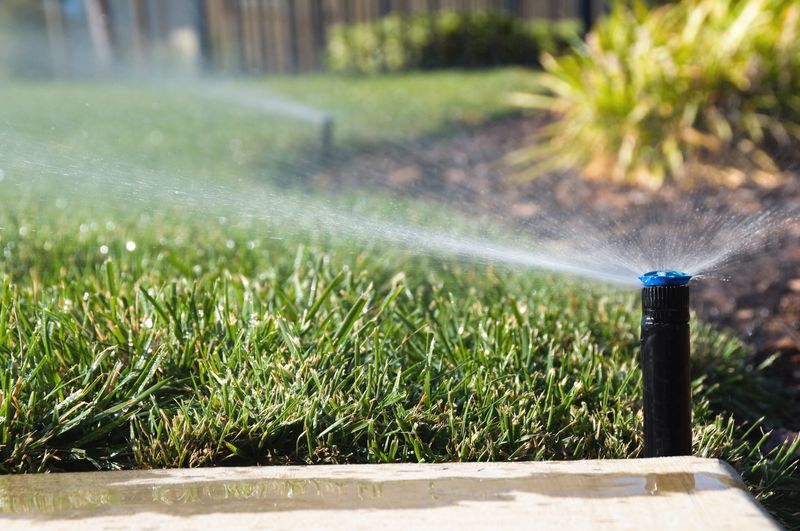
Spray heads use water rapidly and work well on small, flat locations. They also develop overflow on clay if you run them too long. High-efficiency rotary nozzles apply water more gradually and equally, a great suitable for medium to big yards and moderate slopes. Rotor heads that toss cross countries need adequate pressure, and they exaggerate protection gaps if not spaced correctly.
Drip watering earns a spot in shrub beds and narrow turf strips that bake against driveways. In Greensboro's heat, drip minimizes evaporation and prevents tossing water onto hardscapes. Cover the lines gently with mulch and examine filters seasonally. For grass, subsurface drip is a choice in new setups where soil prep is extensive, however retrofits on compressed clay can be finicky.

Edge cases matter in landscaping greensboro nc tasks: narrow parkways only 3 to 4 feet wide are difficult to water with sprays without hitting the street. Drip line or micro sprays on stakes conserve water and avoid misting into traffic.
Dealing with shade, trees, and roots
Mature oaks and maples turn irrigation into a competition. Tree roots are aggressive, and they prefer the same moisture and nutrients as grass. In summertime, shaded grass requires less water, however the tree may take whatever you give. Shaded locations also dry more slowly, so watering them like bright locations promotes disease.
It pays to split zones so shaded grass runs less often. Goal sprinklers to prevent moistening tree trunks. Where roots dominate and turf thins in spite of cautious watering, consider a mulch bed or a shade-tolerant groundcover. No quantity of watering fixes zero sunlight. A lighter discuss water and a sensible plant choice beats having a hard time fescue under a southern red oak.
Avoiding disease during clammy stretches
Greensboro's summer nights hardly ever drop low enough to completely dry the canopy after evening watering. Brown patch and dollar spot find that environment friendly. The biggest cultural controls are early morning watering, appropriate mowing height, and preventing excess nitrogen in late spring and summer on fescue.
If illness appears, reduce irrigation frequency, not depth. Keep the same weekly inches however apply them in less occasions. Let the surface area dry. When you cut, clean clippings from devices to prevent spreading out spores from a problem area to a healthy one. In some cases a short-term skip for 3 to 4 days throughout a wet spell makes more difference than anything else you can do.
Calibrating runtimes without guessing
The catch-cup test is step one. Step two is determining how deeply that water penetrates. After an irrigation cycle, wait several hours, then penetrate the soil with a screwdriver, a pocket knife, or a soil probe. You're searching for a minimum of 4 to 6 inches of damp soil for fescue throughout summer season and 6 to 8 inches for Bermuda and zoysia. If you only see wetness in the leading two inches, include runtime or include a cycle. If the top is slushy and an inch down is dry, spread out the runtime with more soak intervals.
I like to mark a number of test spots, one in a warm area and one near a slope. Examine those consistently. Over a season, you'll learn how each zone equates to depth in that particular soil. That beats any generic schedule you'll find packaged with a controller.
Mowing height and watering work together
Watering a fescue lawn short and tight is a dish for heat tension. Set mowing height at 3.5 to 4 inches through summer. Taller blades shade the soil, minimize evaporation, and motivate much deeper rooting. For Bermuda, 1 to 2 inches fits most residential lawns, but it demands a reputable schedule. A scalped Bermuda yard bakes and needs more water to recover.
Don't mow right after watering. Soft, damp soil compacts under mower wheels, and cutting damp blades tears tissue, making disease more likely. Time irrigation so the yard is dry by mid-morning on trimming days.
Don't forget the landscape beds
Irrigation discussions typically focus on grass, however landscape beds can drink more than you think, specifically with fresh plantings. New shrubs and trees need constant wetness for the very first year. Drip or bubbler emitters positioned at the edge of the root ball, then gradually moved outside as roots grow, conserve water and develop plants quicker. Mulch 2 to 3 inches deep, keep it off the trunk, and you'll cut irrigation requirements meaningfully.
Beds under the eaves can be remarkably dry, even during storms. If your controller treats them like turf zones, they're probably overwatered in spring and thirsty in summertime. Split them into different programs if possible.
Rain, overflow, and Greensboro infrastructure
It only takes one storm to understand how quick Greensboro streets can fill. If your system sends out water flowing down the driveway, you're not just losing water, you're adding to stormwater load. Adjust heads to keep water off hardscapes, fix low heads that drown the curb, and think about a rain garden or a little swale to capture overflow on-site. For homes downhill of neighbors, be proactive about directing water securely. It's simpler to shape a shallow channel now than to repair eroded grass every September.
Smart watering dovetails with good drain. Downspout extensions that discard into the yard can replace a watering cycle on that side of the lawn after a storm, but they can likewise create soggy patches and fungus if the grade is incorrect. Spread the circulation with a splash block or a buried drain line that exits in a part of the yard that can take the load.
When to upgrade your system
If you inherited a system with combined head types on the exact same zone, chronic dry spots, and a controller with a blinking 12:00 from 2006, an upgrade can pay for itself in a number of seasons. Matching heads within zones is step one. High-efficiency nozzles enhance harmony and lower runoff. Pressure guideline at the head or zone helps misting, particularly on hot afternoons when system pressure spikes. A modern-day controller with weather-based scheduling and easy rain avoids prevents the "set it and forget it" trap that drains wallets in July.
Before changing hardware, confirm the fundamentals: leakages, broken fittings, clogged up filters, slanted or sunken heads, and coverage spaces near corners. Lots of ugly dry crescents are simply from a head that settled an inch low.
Establishing brand-new sod or seed in the Triad
New sod in Greensboro loves regular, light irrigation for the very first week, just enough to keep the soil under the sod moist but not squishy. Carefully lift a corner and press your fingers into the soil. If it's cool and somewhat wet, you're on track. After roots start to knit, typically by week two, taper to much deeper, less frequent watering. Prevent evening applications to decrease disease risk.
Overseeding fescue in early fall is almost a routine here. After aeration and seed, keep the leading quarter inch of soil regularly wet. That means short, multiple everyday runs at initially, then spacing them out as germination occurs. By week three, begin consolidating into less, longer cycles to motivate root development. A lot of folks keep babying seedlings with misty surface water. The result is shallow roots and a lawn that collapses in the very first hot spell.
Practical checks most property owners skip
A five-minute monthly walk-through saves hours of uncertainty later on. Appear heads by hand, try to find leaks at the wiper seal, spin rotors to ensure smooth rotation, and expect great mist in hot weather which indicates excess pressure. Keep in mind any heads buried too deep after a layer of topdressing or mulch. Remedying a tilted head can repair a dry strip along a driveway better than adding runtime.
Take a screwdriver to the soil at a couple of representative spots. If you can't penetrate the top two inches after a regular rain week, you're handling compaction. Aeration in fall for fescue lawns and topdressing with compost in thin locations make irrigation more effective than any controller tweak.
Budget-friendly adjustments with huge impact
You do not need to replace the whole system to see improvement. Switching standard spray nozzles for high-efficiency rotary nozzles on problem zones reduces runoff on clay right away. Adding simple check valves to low heads on a slope stops water from draining pipes out after the zone shuts off. A pressure-regulating head solves misting that drainages on hot days. And a standard rain sensing unit that in fact works can cut watering by 10 to 20 percent in a damp spring.
For smaller sized lawns without watering, a heavy-duty hose pipe timer with multiple cycles and an excellent oscillating or rotary sprinkler, paired with a rain gauge, can match the results of an installed system if you're willing to pay attention.
Two fast reference lists worth keeping
- Weekly water targets in Greensboro: Tall fescue: 1 to 1.25 inches spring and fall, approximately 1.5 inches in sustained summertime heat if stress shows. Bermuda and zoysia: 0.5 to 1 inch in summer season once established, less during shoulder seasons. New seed or sod: frequent, light watering in the beginning, then taper to depth within two to three weeks. Shrubs and young trees: constant wetness at the root zone for the very first year, typically weekly deep watering depending on rain. Beds under eaves: monitor individually, they might require water even after storms. Situations that require cycle-and-soak: Clay soils where water ponds or run within minutes. Sloped front yards that send out water to the sidewalk. Spray zones with high precipitation rates. Areas baking under afternoon sun near pavement. Newly seeded areas where you need to keep the surface moist without creating puddles.
How expert landscaping ties it together
An excellent Greensboro landscaping crew reads the residential or commercial property like a map. They different sun and shade into different programs, match heads, set cycle-and-soak where clay demands it, and adjust seasonally. They likewise coordinate irrigation with mowing, fertilization, and aeration. For instance, avoiding watering the early morning of a summer mow keeps ruts out of soft soil. After fall overseeding, they pivot from surface area moisture to root depth exactly when seedlings are ready.
If you're dealing with a supplier, ask how they determine runtimes and how they verify harmony. A basic mention of catch cups and soil probing is an excellent sign. If they build a program in minutes and never ever stroll the lawn, you're most likely paying for water that doesn't hit the target.
The reward for patience
Smart irrigation is less about devices and more about taking notice of depth, action, and season. When you water to achieve 4 to 6 inches of moisture for fescue in July, when you let the surface area dry between cycles on clay, and when you prevent damp leaves overnight, the lawn steadies. You'll still see August tension on that southwest corner, which's fine. Address the corner, not the whole backyard. By September, the lawn breathes once again, and your earlier restraint pays you back with more powerful roots that bring into next year.
Greensboro yards are not blank slates. They keep in mind compaction, shade, and last summer season's fungi. Deal with watering as the daily routine that either enhances their strengths or their weaknesses. Get the routine right, and the rest of your landscaping plan rests on a company foundation.
Business Name: Ramirez Landscaping & Lighting LLC
Address: Greensboro, NC
Phone: (336) 900-2727
Website: https://www.ramirezlandl.com/
Email: [email protected]
Hours:
Sunday: Closed
Monday: 8:00 AM–5:00 PM
Tuesday: 8:00 AM–5:00 PM
Wednesday: 8:00 AM–5:00 PM
Thursday: 8:00 AM–5:00 PM
Friday: 8:00 AM–5:00 PM
Saturday: 8:00 AM–5:00 PM
Google Maps: https://www.google.com/maps/search/?api=1&query=Google&query_place_id=ChIJ1weFau0bU4gRWAp8MF_OMCQ
Map Embed (iframe):
Social Profiles:
Facebook
Instagram
Major Listings:
Localo Profile
BBB
Angi
HomeAdvisor
BuildZoom
Ramirez Landscaping & Lighting is a Greensboro, North Carolina landscaping company providing design, installation, and ongoing property care for homes and businesses across the Triad.
Ramirez Landscaping & Lighting offers hardscapes like patios, walkways, retaining walls, and outdoor kitchens to create usable outdoor living space in Greensboro NC and nearby communities.
Ramirez Landscaping & Lighting provides irrigation services including sprinkler installation, repairs, and maintenance to support healthier landscapes and improved water efficiency.
Ramirez Landscaping & Lighting specializes in landscape lighting installation and design to improve curb appeal, safety, and nighttime visibility around your property.
Ramirez Landscaping & Lighting serves Greensboro, Oak Ridge, High Point, Brown Summit, Winston Salem, Stokesdale, Summerfield, Jamestown, and Burlington for landscaping projects of many sizes.
Ramirez Landscaping & Lighting can be reached at (336) 900-2727 for estimates and scheduling, and additional details are available via Google Maps.
Ramirez Landscaping & Lighting supports clients with seasonal services like yard cleanups, mulch, sod installation, lawn care, drainage solutions, and artificial turf to keep landscapes looking their best year-round.
Ramirez Landscaping & Lighting is based at 2700 Wildwood Dr, Greensboro, NC 27407-3648 and can be contacted at [email protected] for quotes and questions.
Popular Questions About Ramirez Landscaping & Lighting
What services does Ramirez Landscaping & Lighting provide in Greensboro?
Ramirez Landscaping & Lighting provides landscaping design, installation, and maintenance, plus hardscapes, irrigation services, and landscape lighting for residential and commercial properties in the Greensboro area.
Do you offer free estimates for landscaping projects?
Ramirez Landscaping & Lighting notes that free, no-obligation estimates are available, typically starting with an on-site visit to understand goals, measurements, and scope.
Which Triad areas do you serve besides Greensboro?
Ramirez Landscaping & Lighting serves Greensboro and surrounding Triad communities such as Oak Ridge, High Point, Brown Summit, Winston Salem, Stokesdale, Summerfield, Jamestown, and Burlington.
Can you help with drainage and grading problems in local clay soil?
Yes. Ramirez Landscaping & Lighting highlights solutions that may address common Greensboro-area issues like drainage, compacted soil, and erosion, often pairing grading with landscape and hardscape planning.
Do you install patios, walkways, retaining walls, and other hardscapes?
Ramirez Landscaping & Lighting offers hardscape services that commonly include patios, walkways, retaining walls, steps, and other outdoor living features based on the property’s layout and goals.
Do you handle irrigation installation and repairs?
Ramirez Landscaping & Lighting offers irrigation services that may include sprinkler or drip systems, repairs, and maintenance to help keep landscapes healthier and reduce waste.
What are your business hours?
Ramirez Landscaping & Lighting lists hours as Monday through Saturday from 8:00 AM to 5:00 PM, and closed on Sunday. For holiday or weather-related changes, it’s best to call first.
How do I contact Ramirez Landscaping & Lighting for a quote?
Call (336) 900-2727 or email [email protected]. Website: https://www.ramirezlandl.com/.
Social: Facebook and Instagram.
Ramirez Landscaping & Lighting proudly serves the Greensboro, NC community and offers professional landscape design solutions for residential and commercial properties.
For outdoor services in Greensboro, NC, contact Ramirez Landscaping & Lighting near Piedmont Triad International Airport.